Aisles
The Living and the Dead, Intermingling Gracefully in Pasadena
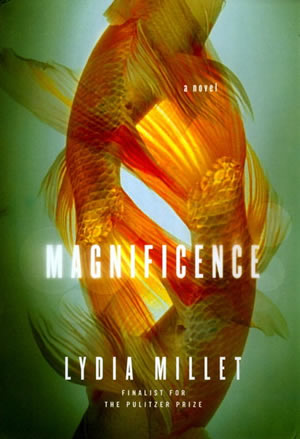 Magnificence, Lydia Millet’s new novel, centers on Susan, a wife and mother whose life is being shaped by various forms of loss. The third in a trilogy (the first was 2008's How the Dead Dream and the second, 2011's Ghost Lights), the novel begins in the aftermath of the sudden, violent death of Susan’s husband, Hal. Although his death occurs on another continent, Susan blames herself, having been neglectful of her husband during an almost-gleeful period of infidelity during which she began calling herself a “slut.” This promiscuity was an indirect response to an earlier family trauma, when Susan and Hal’s teenage daughter became paralyzed in a car crash, and Hal’s death compounds Susan’s sense of guilt at her family’s disintegration. Her self-reference slides from “slut” to “murderer” all too easily.
When a distant uncle passes away, though, Susan inherits a fading mansion filled with meticulously classified taxidermy. She moves into the house, first alone, and then surrounded by a menagerie of geriatric extended family. As she eases into the space, she becomes increasingly focused on her late uncle’s legacy, bringing a curator’s eye to his collection of hunted creatures. Through the process of trying to understand who her uncle was and why this hobby became an obsession, Susan attempts to crack the code of her husband’s death and regain her own psychological freedom.
The home becomes a transformative space where—similar to the bathhouse in Miyazake’s Spirited Away—the demarcation between the living and the dead melts away. In her new home, Susan moves “peacefully between the walls as though she walked a neat path in history, as though her time and place were not the product of chance at all but of an ancient arrangement. She lived in the soft footprint of a ceremony. And the longer she lived there, the rarer were the thoughts of the knife.”
Magnificence is filled with ghosts, then, but it’s not a ghost story. Millet’s interests here are the subterranean currents of love and attachment, and she is an expert at depicting the interplay of memory and shifting time in the real world. Millet conveys how learning to live with the dead is where an increasing amount of adult consciousness is spent as our loved ones are lost to various stages of death, and effortlessly weaves these layers of consciousness to create a kind of magic in their comingling. She also brings a delicate sense of humor to her work that sheds light on dark human terrain, and grants her protagonist the ability to break through guilt-based patterns and the limits to potential that these patterns engender. The result is a novel that gives a voice to the dead and dying, dignity to the hunted, and a chance at forgiveness for the guilty who are left behind.
 Rachel Greben is a writer and arts education consultant. Last spring, she reviewed the Cindy Sherman retrospective at the Museum of Modern Art.